The Hour of the Furnaces
1968 · film · Argentina
Not available in the US right now. See other countries on TMDB ↗ (opens TMDB in a new tab) Checked Oct 2026.
Directed by: Octavio Getino, Fernando E. Solanas
Starring: María de la Paz, Fernando E. Solanas, Edgardo Suárez, Juan Domingo Perón, Che Guevara, Fidel Castro
Runtime: 260 min
Produced in: Argentina
The countries whose companies made the film, from TMDB.
Why it mattersAI-assisted
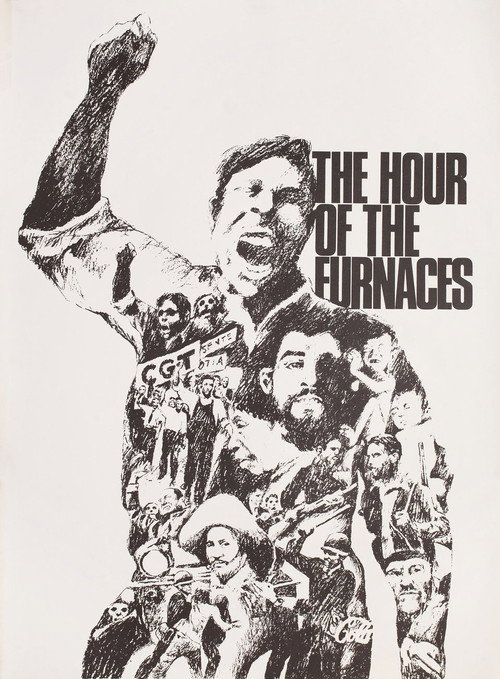
The Hour of the Furnaces is a documentary about the liberation struggle in Latin America1. The film is directed by Octavio Getino and Fernando E. Solanas23 and won 2 awards4.
Sources
- synopsis — An impassioned three-part documentary of the liberation struggle waged throughout Latin America, using Argentina as a historical example of the imperialist exploitation of the continent. Part I: Neo-Colonialism and Violence is a historical, geographic, and economic analysis of Argentina. Part II: An Act For Liberation examines the ten-year reign of Juan Perón (1945-55) and the activities of the Peronist movement after his fall from power. Part III: Violence and Liberation studies the role of violence in the national liberation process and constitutes a call for action. · TMDB ↗ (opens in a new tab)
- credit — The Hour of the Furnaces (1968) is directed by Octavio Getino. · TMDB ↗ (opens in a new tab)
- credit — The Hour of the Furnaces (1968) is directed by Fernando E. Solanas. · TMDB ↗ (opens in a new tab)
- award — The Hour of the Furnaces (1968) awards (OMDb): 2 wins · IMDb, via OMDb ↗ (opens in a new tab)
Synopsis
An impassioned three-part documentary of the liberation struggle waged throughout Latin America, using Argentina as a historical example of the imperialist exploitation of the continent. Part I: Neo-Colonialism and Violence is a historical, geographic, and economic analysis of Argentina. Part II: An Act For Liberation examines the ten-year reign of Juan Perón (1945-55) and the activities of the Peronist movement after his fall from power. Part III: Violence and Liberation studies the role of violence in the national liberation process and constitutes a call for action.